How to Use a Fire Extinguisher — Remember P.A.S.S.
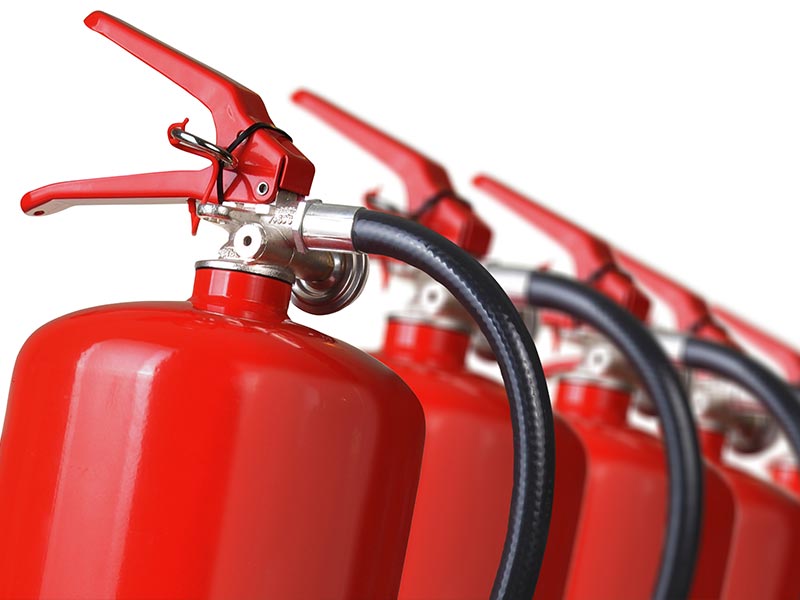
- P — Pull the pin. Break the seal so the handle can be operated.
- A — Aim low. Point the nozzle at the base of the fire, not the flames.
- S — Squeeze the handle. This releases the extinguishing agent.
- S — Sweep side to side. Cover the base of the fire until it’s out.
Always keep an exit at your back, and never fight a fire that is larger than you, spreading, or between you and the way out. When in doubt, get out and call 911.
The Theory of Fire
Fire needs four things to start and keep burning: heat, oxygen, fuel, and an uninterrupted chemical chain reaction. Together these make up the “fire tetrahedron.” Remove any one of them and the fire goes out.
Oxygen is all around us in the air. Fuel is anything that burns — paper, wood, flammable liquids, and gases. Heat can come from electrical equipment, open flames, friction, or hot surfaces. Fire extinguishers work by attacking one or more sides of that tetrahedron: cooling the fuel, smothering the oxygen, or interrupting the chemical reaction.
The Classes of Fire (U.S. — NFPA 10)
In the United States, fires are grouped into five classes based on what’s burning. Using the wrong type of extinguisher can be ineffective — or dangerous.

- Class A — Ordinary combustibles such as wood, paper, cloth, trash, and most plastics.
- Class B — Flammable liquids and gases such as gasoline, oil, grease, solvents, propane, and natural gas.
- Class C — Energized electrical equipment, including wiring, panels, motors, and appliances that are plugged in or live.
- Class D — Combustible metals such as magnesium, titanium, sodium, and potassium. Common in manufacturing and machine shops.
- Class K — Cooking oils and fats in commercial kitchens. Required wherever deep fryers and commercial cooking equipment are in use.
How to Read a Fire Extinguisher Label
In the U.S., fire extinguishers are red and are identified by their rating and pictogram symbols — not by color. There are two labeling systems you’ll see, often together:
Picture symbols (pictograms). Each label shows simple icons for the fire classes the extinguisher is rated for. A slashed (crossed-out) symbol means do not use it on that class of fire.
Letter and number ratings. For example, a label reading 2A:10B:C means:
- 2A — the relative extinguishing capacity on Class A fires (the higher the number, the more it can handle),
- 10B — the approximate square footage of a Class B fire an average user can put out,
- C — safe for use on energized electrical equipment (the “C” never carries a number).
Knowing how to read the label means you can confirm at a glance that the right extinguisher is in the right place.
Types of Extinguishers and What They’re For
ABC Dry Chemical (multipurpose). The most common extinguisher in offices, retail, and general commercial use. Rated for Class A, B, and C fires. It coats the fuel and interrupts the chemical reaction. It does leave a fine residue, so it’s less ideal around sensitive electronics.
BC Dry Chemical. Rated for Class B and C fires only. Often used where flammable liquids are present and in older kitchen installations.
Carbon Dioxide (CO2). Rated for Class B and C fires. It’s clean and leaves no residue, which makes it a good choice for electrical equipment, labs, and electronics. It works by displacing oxygen, so it’s less effective outdoors or in drafty areas.
Clean Agent (halocarbon). Rated for Class B and C — and some models for Class A. These leave no residue and are the go-to choice for protecting server rooms, data centers, and control rooms. A modern replacement for the old halon extinguishers.
Wet Chemical (Class K). Required for commercial kitchens. Designed for cooking oils and fats, it reacts with the hot oil to form a soapy foam layer (saponification) that smothers the fire and cools it to prevent reignition.
Water (and water mist). Rated for Class A only. It cools the fuel below its ignition point. Standard water extinguishers conduct electricity and must never be used on electrical or flammable-liquid fires. Water-mist units are an option where a clean, electrically safe Class A agent is needed (e.g., healthcare).
Dry Powder (Class D). A specialized agent for combustible-metal fires only. Not interchangeable with the “dry chemical” extinguishers above.
Foam. Historically AFFF foam was used on Class A and Class B fires. Important update: AFFF and other PFAS-containing foams are being phased out across the U.S. due to environmental and health regulations. Newer fluorine-free (F3) foams are now available. If your facility still has AFFF units, talk to us about a compliant transition plan.
How to Choose the Right Extinguisher
Match the extinguisher to the hazard:
- General office, retail, and commercial space — ABC dry chemical.
- Commercial kitchens — Class K wet chemical (in addition to a Class ABC nearby).
- Server rooms, electronics, labs — CO2 or clean agent.
- Areas with flammable liquids/fuels — ABC or BC dry chemical.
- Machine shops / combustible metals — Class D dry powder.
The right number, size, placement, and travel distance of extinguishers are all governed by NFPA 10 and your local fire code. If you’re not sure what you need, that’s exactly what we’re here for — call us for a walkthrough.
Inspection, Maintenance, and Testing (NFPA 10)
A fire extinguisher only protects you if it’s charged, accessible, and in working order. NFPA 10 sets a required schedule of inspections and maintenance, and your local Authority Having Jurisdiction (AHJ) enforces it. Skipping these isn’t just unsafe — it’s a code violation that can show up in an inspection.
- Monthly visual inspection. Confirm the extinguisher is in its place, accessible, undamaged, the pin and seal are intact, and the pressure gauge reads in the green. This can be done by your staff.
- Annual maintenance inspection. A thorough check by a licensed, certified technician, with a new service tag applied.
- 6-year internal examination. Rechargeable extinguishers are emptied, internally inspected, and recharged.
- Hydrostatic testing. Pressure testing of the cylinder itself — every 5 or 12 years depending on the extinguisher type. Your technician will confirm the schedule for each unit.
Fire Sprinkler Services handles inspection, maintenance, recharging, hydrostatic testing, and tagging — keeping your equipment compliant and your business inspection-ready year-round.
A Note on Extinguisher Color
An extinguisher does not need to be replaced simply because of its appearance. A unit is replaced when it’s no longer serviceable — for example, due to corrosion, a failed hydrostatic test, or damage that can’t be repaired. We’ll tell you straight whether a unit can be serviced or needs replacing.
Serving Jacksonville and Northeast Florida
Fire Sprinkler Services provides fire extinguisher sales, installation, inspection, and maintenance for businesses throughout the Jacksonville area. Whether you need a single unit, a full building survey, or an ongoing inspection program to stay NFPA 10 compliant, we can help.
9313 Old Kings Rd South, Jacksonville, FL 32257